
Rainforest Facts for Kids That Will Blow Your Mind!

Rainforest facts for kids are some of the most searched topics online, and for good reason. These incredible ecosystems are like nature’s own superheroes – they clean our air, house millions of creatures, and keep our planet healthy. If you have ever wondered what makes rainforests so special or why everyone keeps talking about saving them, you are in the right place. This article breaks everything down in simple, easy-to-understand language so kids, parents, and teachers can all learn something new.
What Exactly Is a Rainforest?
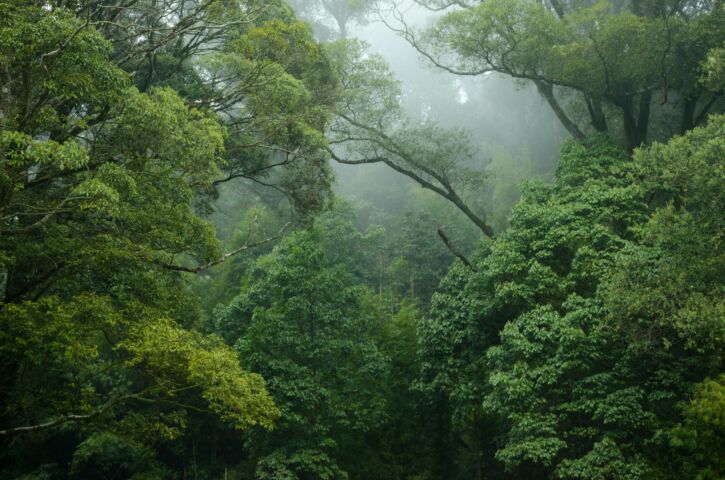
A rainforest is a thick forest that gets a ton of rain throughout the year. The name basically says it all – it is a forest where it rains… a lot. These forests are found in tropical and temperate regions around the world. Tropical rainforests sit near the equator where it is hot and humid all year round. Temperate rainforests are found in cooler coastal areas, mostly along the Pacific Northwest in the United States and parts of Canada, Chile, New Zealand, and Australia.
According to National Geographic Education, rainforests are found on every continent except Antarctica. That means no matter where you live, there is probably a rainforest somewhere on the same continent as you.
The Four Layers of a Rainforest Ecosystem
One of the coolest things about rainforests is how they are built in layers, kind of like a giant apartment building where different animals live on different floors. The rainforest ecosystem layers work together to create a home for millions of species.
1. The Emergent Layer
This is the very top floor, where the tallest trees poke out above everything else. These trees can reach up to 200 feet high. It is super sunny and windy up here, so the animals that live here are usually great at flying or gliding. Think harpy eagles, butterflies, and bats. The leaves on these trees are small and waxy to hold onto moisture because the wind dries things out fast.
2. The Canopy
Just below the emergent layer is the canopy, which is like the roof of the rainforest. This layer is made up of thick, interlocking branches and leaves that block most of the sunlight from reaching the ground. It is basically the busiest neighborhood in the whole forest. More than half of all rainforest animals live here, including sloths, monkeys, toucans, and tree frogs. The canopy is where most of the photosynthesis happens – that is the process where plants turn sunlight into energy.
3. The Understory
Below the canopy is the understory, which is much darker and more humid. The plants here have big, broad leaves to catch whatever tiny bits of sunlight sneak through the canopy. This is where you will find snakes, jaguars, gorillas, and lots of insects. Many animals here are camouflaged – that means they blend in with their surroundings to hide from predators or sneak up on prey.
4. The Forest Floor
At the very bottom is the forest floor. It is dark, damp, and covered in decomposing leaves and plants. There is almost no sunlight here, but that is perfect for fungi and decomposers – the cleanup crew of the rainforest. Their job is to break down dead stuff and turn it into nutrients that feed the rest of the forest.
Why Rainforests Are Important?
If you have ever asked why rainforests are important, here is the short answer: we literally cannot live without them. Rainforests do so much for our planet that scientists call them the “lungs of the Earth” (even though that nickname is not 100% scientifically accurate).
Here are the main reasons rainforests matter:
- They absorb carbon dioxide. Rainforest trees suck up massive amounts of CO2, which is a greenhouse gas that traps heat in our atmosphere. The Amazon rainforest alone removes about 1.2 billion metric tons of carbon from the atmosphere every year.
- They produce oxygen. While trees do use up most of the oxygen they make, rainforests still contribute to the global oxygen supply.
- They regulate weather and rainfall. Rainforests create their own weather. Trees release water vapor into the air through a process called transpiration, which helps form clouds and brings rain. A study from the University of Sao Paulo found that 25% of Brazil’s rain in the southern and southeastern regions is directly related to the Amazon rainforest.
- They are home to medicines. About 25% of all modern medicines come from plants found in rainforests. The rosy periwinkle, a flower from Madagascar’s rainforest, is used to treat childhood leukemia and has saved thousands of lives.
- They support indigenous communities. Over 30 million people live in the Amazon rainforest alone, including about 350 indigenous groups who have lived there for thousands of years.
Tropical Rainforest Animals You Need to Know
The variety of tropical rainforest animals is absolutely mind-blowing. Rainforests cover only about 6% of Earth’s surface, but they are home to more than half of all known species on the planet. That is what scientists call biodiversity – basically, a huge variety of life.
Here are some of the most fascinating rainforest creatures:
| Animal | Where It Lives | Cool Fact |
|---|---|---|
| Sloth | Canopy | Moves so slowly that algae grows on its fur, which helps it blend in with the trees |
| Poison Dart Frog | Forest floor | One tiny frog has enough poison to kill 10 grown men, but only if they eat it |
| Jaguar | Understory and forest floor | The third-largest cat in the world and the strongest biter among big cats |
| Harpy Eagle | Emergent layer | Has talons as big as a grizzly bear’s claws |
| Leafcutter Ant | Forest floor | Can carry pieces of leaves 50 times their own body weight |
| Toucan | Canopy | Its huge beak helps it stay cool in the hot rainforest |
| Anaconda | Rivers and swamps | The heaviest snake in the world, can weigh over 500 pounds |
Amazon Rainforest Facts That Will Surprise You
When people talk about rainforests, they usually mean the Amazon. It is the biggest rainforest on Earth, and amazon rainforest facts are always fascinating. Here are some that will make your jaw drop:
- The Amazon rainforest is so big that it spans nine countries: Brazil, Peru, Colombia, Venezuela, Ecuador, Bolivia, Guyana, Suriname, and French Guiana.
- It is roughly the size of the contiguous United States. If it were a country, it would be the ninth largest in the world.
- The Amazon River, which runs through it, carries more water than the next seven largest rivers combined.
- Scientists estimate that there are about 390 billion trees in the Amazon. Yes, billion with a B.
- About 10% of all known species on Earth live in the Amazon.
- The forest is so dense and so old that there are still uncontacted tribes living there who have never had contact with the outside world.
Rainforest Deforestation Effects
Now for the not-so-fun part. Rainforest deforestation effects are some of the biggest environmental problems we face today. Deforestation means cutting down or burning forests to clear land for farming, cattle ranching, or logging.
Here is what happens when we destroy rainforests:
1. Climate Change Gets Worse
When trees are cut down, they release all the carbon they have stored back into the atmosphere. Deforestation is responsible for about 10% of all global greenhouse gas emissions. That is more than the entire global transportation sector.
2. Animals Lose Their Homes
Every year, thousands of species go extinct because their rainforest habitat is destroyed. Scientists say we are in the middle of the sixth mass extinction in Earth’s history, and deforestation is a major cause.
3. Indigenous People Are Displaced
Many indigenous communities rely on the rainforest for food, medicine, and shelter. When the forest disappears, their way of life disappears too.
4. Water Cycles Break Down
Remember how rainforests make their own rain? When you cut down the trees, the area gets less rainfall. This can turn lush forest into dry savanna, which is exactly what scientists worry is happening to parts of the Amazon.
5. We Lose Potential Cures
Scientists have only studied a tiny fraction of rainforest plants for medical use. Every time we destroy a section of rainforest, we might be destroying a plant that could cure cancer or other diseases.
How to Help Save the Rainforest
The good news is that there are real ways to help. If you are wondering how to help save the rainforest, here are practical steps that actually make a difference:
1. Reduce, Reuse, Recycle
A lot of deforestation happens to make paper, cardboard, and wood products. By using less and recycling more, you reduce the demand for these materials.
2. Be Smart About What You Buy
Palm oil, soy, and beef are three of the biggest drivers of deforestation. Check product labels and try to buy items made with sustainable palm oil or certified by organizations like the Rainforest Alliance.
3. Support Conservation Organizations
Groups like the Rainforest Foundation, World Wildlife Fund, and Amazon Watch work directly to protect rainforest land and support indigenous rights. Even small donations help.
4. Use Less Paper
Go digital when you can. Use both sides of paper, choose recycled products, and ask your school or workplace to do the same.
5. Spread the Word
Talk to your friends and family about why rainforests matter. Share rainforest facts for kids on social media. The more people who care, the more pressure there is on governments and companies to do the right thing.
6. Plant Trees
While planting a tree in your backyard does not directly replace rainforest, supporting reforestation projects does help. Some organizations let you “adopt” a tree in the Amazon for a small donation.
Rainforest Biodiversity: Why It Matters?
Rainforest biodiversity is not just about having cool animals to look at. Biodiversity means the variety of all living things in an ecosystem, and rainforests have more biodiversity than anywhere else on Earth.
Here is why that matters to you:
- Food security. Many of the foods we eat every day originally came from rainforests, including chocolate, coffee, bananas, and vanilla. Wild rainforest plants are also used to breed new crop varieties that resist disease.
- Medical research. As mentioned earlier, rainforest plants are the source of many life-saving drugs. With more biodiversity, there are more chances to find new treatments.
- Ecosystem resilience. A diverse ecosystem is like a diverse investment portfolio. If one species fails, others can step in and keep the system running. Monocultures (areas with only one type of plant) are much more vulnerable.
- Cultural value. Indigenous cultures have deep knowledge of rainforest plants and animals. Losing biodiversity means losing that knowledge forever.
Where Are the Biggest Rainforests?
Rainforests are not just in the Amazon. Here are the major ones around the world:
- Amazon Rainforest (South America) – The largest, covering about 2.1 million square miles
- Congo Rainforest (Africa) – The second largest, home to forest elephants and gorillas
- Daintree Rainforest (Australia) – The oldest rainforest, about 180 million years old
- Southeast Asian Rainforests – Includes forests in Indonesia, Malaysia, and Papua New Guinea
- Pacific Temperate Rainforest (North America) – Stretches from Alaska down to Northern California
- Tongass National Forest (Alaska, USA) – The largest intact temperate rainforest in the world
Frequently Asked Questions
Got questions? You are not alone. Here are some of the most common things people ask about rainforests, answered in plain, simple language.
1. What is the difference between a tropical and temperate rainforest?
Tropical rainforests are hot and humid year-round because they sit near the equator. Temperate rainforests are cooler and found in coastal areas at higher latitudes, like the Pacific Northwest. Both get lots of rain, but tropical rainforests have much more biodiversity.
2. How much of the rainforest has been destroyed?
Scientists estimate that about 17% of the Amazon rainforest has been lost in the last 50 years. Globally, we lose about 10 million hectares of forest every year. That is roughly the size of Iceland disappearing annually.
3. Can rainforests grow back after being cut down?
Sometimes, but it takes a very long time. Secondary forests (areas that regrow after clearing) usually have less biodiversity than primary forests. Some species may never return. That is why protecting existing rainforest is much more effective than trying to replant it.
Conclusion
Rainforest facts for kids are not just fun trivia – they are a window into understanding one of the most important ecosystems on our planet. From the four rainforest ecosystem layers to the incredible tropical rainforest animals that call them home, these forests are full of wonder. We have covered why rainforests are important, the serious rainforest deforestation effects we need to address, and practical steps for how to help save the rainforest. Whether you are a student doing a report, a parent teaching your child, or just someone who loves nature, knowing these facts is the first step toward protecting these amazing places. The amazon rainforest facts alone show us how much we have to lose – and how much we can still save if we act now.